Michigan Scientists Integral to Wildand Fire Research in Alaska

You might be surprised by the amount of collaboration between Alaska and Michigan-based scientists over the last 2 decades!  This has been a long-standing research relationship which has spawned many useful products–including Alaska’s fire perimeter map database!  Other endeavors include satellite fire detection and mapping, fuel moisture detection, improvements in fuels mapping, tundra fire research and more. Read about the history of this research relationship and its important findings and products, still ongoing with some exciting current research endeavors in a new Research Brief (LINK).

Nov. 2015 Research Brief, 3pp
Nov. 2015 Research Brief, 3pp

Wildland Fire Science in Alaska Gets Help From ABoVE

NASA’s Arctic Boreal Vulnerability Study (ABoVE) has focused a research spotlight on Alaska & Canada this year.  In August, 2015, they announced 21 new projects funded for a multi-year field campaign designed to investigate the ecological and social impacts of changing permafrost, wildfires, and wildlife habitats in Alaska and northwestern Canada.  Many of these involve new approaches to use remote sensing information from satellites.  At least 5 funded projects involve field work in Alaska and direct involvement with the wildfire science and/or management in Alaska.  Read about the new ABoVE projects at:

http://above.nasa.gov/cgi-bin/above/search_projects.pl?action=4&sol=Terrestrial%20Ecology%20%282014%29

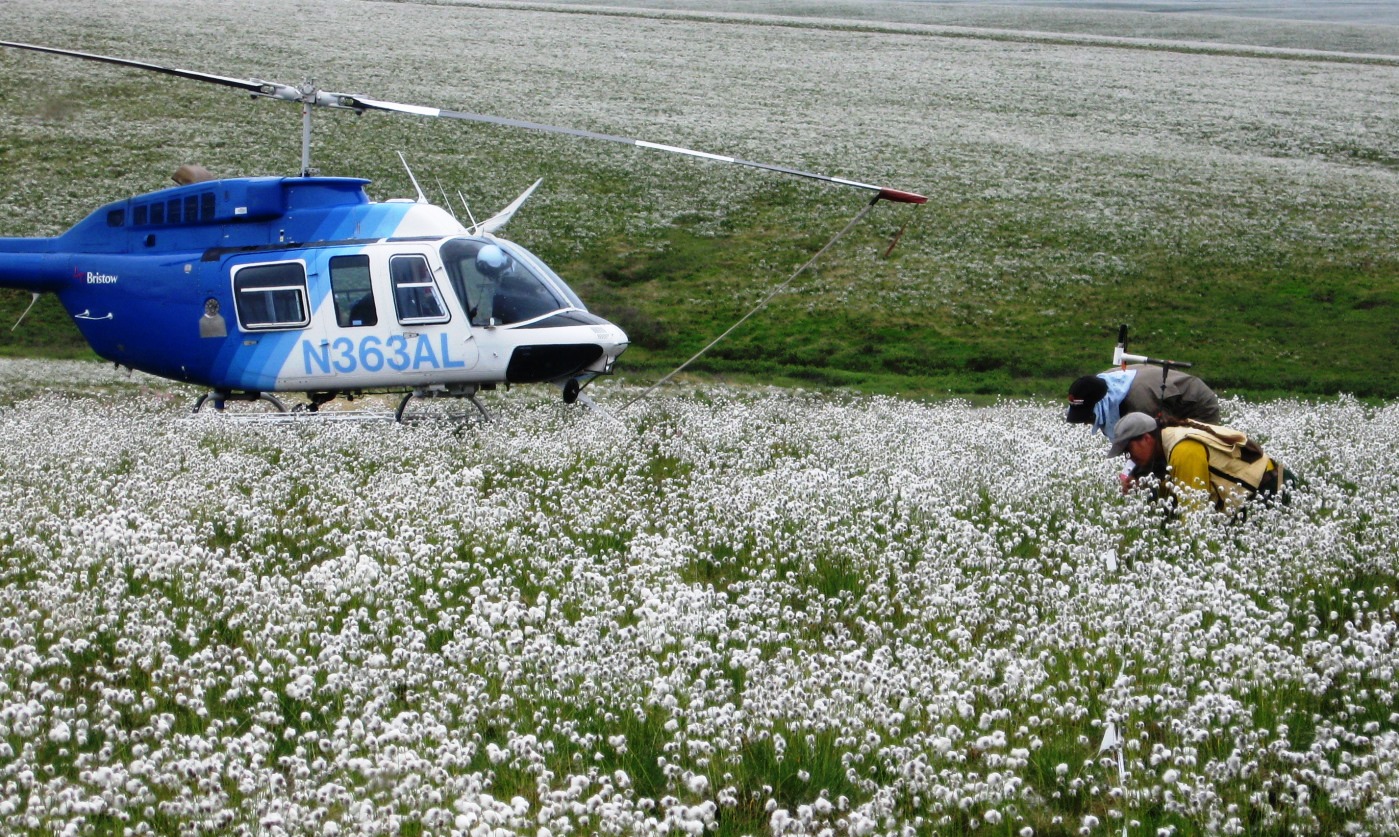
Randi Jandt & Dave Yokel sample a sea of cottongrass 4 years after the Anaktuvuk River fire in Alaska.

Randi Jandt & Dave Yokel sample a sea of cottongrass 4 years after the Anaktuvuk River fire in Alaska.