Does the Drought Code (DC) Accurately Track Deep Drying in Alaska?

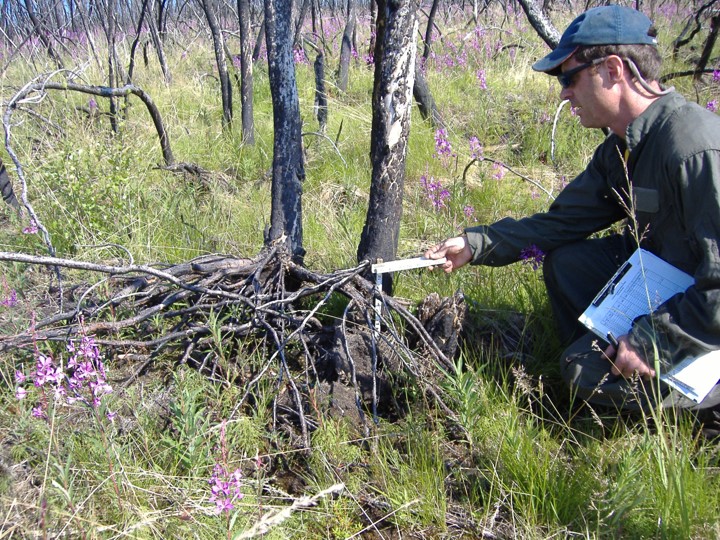
Recent studies by experts in Alaska and Canada have given us much new insight into the Drought Code (DC) component of the Fire Weather Index System used in both places.  While other components of the FWI are simple in concept and easily validated by field observations, there have long been questions about the DC: what does it represent? How it should be interpreted and validated? How and if we should “overwinter” DC? How to convert DC to a moisture content (by weight or by volume) or vice versa?  Canadian fire scientist Chelene Krezek-Hanes recently finished her PhD thesis, which reported on her extensive field work and remote sensing experiments and has yielded four published papers so far.  Meanwhile, Alaska fire ecologist Eric Miller teamed up with University hydrology experts to validate the DC’s assumptions against field data in Alaska. Our latest Research Brief Everything you wanted to know about the Drought Code in Alaska . . . but were afraid to ask” gives highlights of some of their findings: https://www.frames.gov/sites/default/files/AFSC/AFSC/Research/Brief/2023-4-final.pdf

Do Wildfires Encourage Invasive Weeds?

A recent webinar by ACCAP (Alaska Center for Climate Assessment & Policy) explored this question, and is summarized in AFSC’s latest Research Brief (available HERE). A research team at UAF led by Dr. Katie Spellman shared the results of their research in the field since the fires of 2004 as well as follow-up studies in greenhouse experiments. Spellman took up the question of invasive plants and wildfire nearly 20 years ago when she heard that Alaska land managers needed to know more about this issue.

Download the Research Brief or watch the Aug 22, 2023 recorded webinar:

Wildfire and Invasive Plants in Alaska’s Boreal Forest

and Q&A session at ACCAP’s website: https://uaf-accap.org/event/wildfire-invasive-plants/

Burned Twice–Is That Normal?

Can’t help but notice with this year’s fires in interior Alaska, some burned readily into recent (<20 year old) burn scars, like the Delta fire, Hillbilly and Ponds fires southeast of Fairbanks (figure).  Fires to the southwest (Clear Ck and Rock Ck) are re-burning 1950’s and 1960’s burn scars but more recent burn perimeters seem to be working as fuel breaks.  Fire management agencies in Alaska have traditionally relied on burn scars to act as fuel breaks, stopping or significantly moderating fire spread, for up to 50 years post-fire (Cronan and Jandt, 2008).  In the 21st century, however, the phenomenon of early fire re-entry into old burns is becoming more common (Barnes 2017, Buma 2022). 

While a student at UAF, Rafael Rodriguez (forestry technician with the State of Alaska in Fairbanks) showed a strong correlation between the number of times an area had burned between 1940-2010 with mean July temperature (Rodriguez 2014). In 2023, late July and August brought ideal weather for late season wildfires to the interior. Burning still exerts a strong negative feedback on re-burning within 10 years of a fire, and overall only about 4% of burned area in Alaska has burned more than once in the last 30 years (Buma, et al. 2023). Still the phenomenon of early fire re-entry, driven both by warming climate/drying fuels and by forest conversion to grassland or scrub, is very impactful for fire management decisions and agencies are carefully monitoring the trend.

References:

Cronan, J.B. and R.R. Jandt. 2008. How succession affects fire behavior in boreal black spruce forest of interior Alaska. BLM-Alaska Technical Report 59. Anchorage, Alaska: USDI Bureau of Land Management. 15 pp.

Barnes, Jennifer (2017 Presentation) What is Fueling Repeat Fires? Shortened Fire Return Intervals in Copper River Basin and Denali

Buma, Brian. 2022. GRIN: Evaluating flammability of reburns in the boreal forests of Interior Alaska – Final Report to the Joint Fire Science Program. JFSP Project ID: 19-1-01-43. University of Colorado Denver. 23 p.

Rodriguez, Rafael. 2014. Does mean summer temperature influence fire return intervals and area burned in Alaskan boreal forests? 2014 Research Days. Fairbanks, AK: University of Alaska Fairbanks.

Preparing for Wildfire in Alaska’s Residential Areas

Dr. Jen Schmidt (UAA) and retired Alaska forester John See tackle several practical questions about wildfire risk for residents of the Anchorage area in the new, illustrated 75-page report Advancing Wildfire Preparedness and Planning in Anchorage. The study was part of the Arctic Urban Risks and Adaptations (AURA) project, funded by the National Science Foundation. A few highlights can be found in our latest Research Brief–>>HERE.

Many of you will find practical tools and info here that hit pretty close to home! The full report can be located at the project website under “EGRESS” here: https://sites.google.com/alaska.edu/jenschmidt/wildfire/aura/wildfire-exposure. Don’t forget to check the level of wildfire exposure for your own property with the tools on the site! The best way to avoid losses is to do some advance planning and preparation.

Many other interesting materials can be downloaded at the AURA site, like maps of fuel treatments, wildfire videos, and this map of burn severity on the 2019 McKinley fire that Schmidt and her team created.

A fire season in Canada but not Alaska

Alaska Midnight Sun crew boards a bus to head for a Canadian fire assignment June 4, 2023 (Photo credit: Beth Ipsen, BLM Alaska Fire Service)

Why is the Alaska fire season so quiet this year while Canada has major wildfires? Alaska climatologist Rick Thoman attributes the lack of fires in Alaska (only 934 acres burned by the end of June) to a lack of lightning as well as cooler, moister weather this year (Alaska June 2023 Sea Ice and Wildfire). Interesting that this year Alaska retained a lot more sea ice in the Chukchi sea and Arctic Ocean above Barrow: there is some evidence linking regional climate to sea ice concentration (Zou, et al. 2021). Meanwhile, Canada is breaking records with 22.7 million acres burned (9.2 million ha) as of July 9. CiFC (https://ciffc.ca/) reports 3,678 fires spread across the entire country. Canadian and US cities (including Detroit, Pittsburgh, and Chicago) have been suffering poor air quality for much of the mid-summer with little relief in site. Is there an explanation for the unusual pattern? The global temperature anomaly for May (figure) may be one clue. Strong linkages have been found between warm temperatures and wildfire activity, mainly because of accelerated drying of vegetation fuels. In the western US, Abatzoglou and Williams (2016) found that human-caused climate change caused over half of the documented increases in fuel aridity since the 1970s and doubled the cumulative forest fire area since 1984. At any rate, 2023 brought very little snow to eastern Canada, so it melted early and Fire Weather Indices have been unusually high.

Figure from Scott Duncan (ScottDuncanWX@twitter.com)

Fire regime is changing in other parts of the world. Rebecca Scholten is finishing up a PhD in Amsterdam studying weather patterns which correlate with fire activity around the north, especially arctic areas. She’s noted that changes in the polar jet stream driven by warming global temperature seem to be correlated with more wildfire in northern tundra ecosystems. A simplified explanation would be that a “wobbly” polar jet stream caused by weaker cold sink over the Arctic can mean calming in mid-latitudes but intense heat domes, dry and windy conditions, and more convection over high northern latitudes. There seems to be a strong link with these conditions and the Siberian megafires in 2019-2021. Her recent paper in Science points to accelerating changes in high latitudes with earlier snowmelt and a tripling in the frequency of this “Arctic front jet pattern.” Curiously, when this pattern sets up, it may moderate conditions–at least with respect to winds–over interior Alaska!

Citations:

Zou, et al 2021. Increasing large wildfires over the western United States linked to diminishing sea ice in the Arctic. Nat Commun 12, 6048. https://doi.org/10.1038/s41467-021-26232-9

Abatzoglou and Williams. 2016. Impact of anthropogenic climate change on wildfire across western US forests. PNAS 113 (42) 11770-11775. https://doi.org/10.1073/pnas.1607171113

Scholten, R.C. et al. 2022. Early snowmelt and polar jet dynamics co-influence recent extreme Siberian fire seasons. Science 378, 1005–1009. https://doi.org/10.1126/science.abn4419

Alaska Tundra Fires on the Rise

Smokes from East Fork Fire rise from tundra along the Yukon River around St. Mary’s, 6-12-2022. Credit: Jacob Welsh, AK IMT

Five years ago, Adam Young used paleofire evidence to hypothesize how climate warming would affect future tundra fires in Alaska.  Adam basically predicted a big increase in tundra fire occurrence if the average July temperature warmed above a threshold of 13.4°C (56°F:  Young, et al. 2017). This year, Arif Masrur et al. (2022) provided important evidence corroborating Adam’s theory using modern fire and climate records.  The research team use machine learning to determine the relative importance of various climate, prior burn history, and biophysical values on tundra fire occurrence and size. They also tapped the rich collection of field plot data collected by the National Park Service and other management agencies for vegetation characteristics and verification of reburn status.  Arif did, indeed, find a strong increase in recent Alaskan tundra fires concurrent with much warmer summers.  Annual tundra burned area has almost doubled and reburned area has increased by 61% since 2010!  The study also revealed a small but significant feedback effect of previous tundra fires on reburning, validating management strategies like using prescribed fire to reduce wildfire threat near villages.

Figure from Adam Young (2017) showing where he predicted shorter Fire Rotation Periods (more frequent fire) in Alaska with climate warming.

Citations:
Masrur, A., Taylor, A., Harris, L., Barnes, J., and Petrov, A. 2022. Topography, climate and fire history regulate wildfire activity in the Alaskan tundra. Journal of Geophysical Research: Biogeosciences, 127, e2021JG006608. Read the article HERE:  https://doi.org/10.1029/2021JG006608

Young, AM, Higuera PE, Duffy PA and Hu FS. 2017. Climatic thresholds shape northern high-latitude fire regimes and imply vulnerability to future climate change Ecography 40:606–17.  Slides and recording from Adam’s 2019 presentation on this study HERE:  https://www.frames.gov/catalog/60348

Figure 2, Masrur, et al. 2022. [Tundra fire] Regime shift detected in mean annual fire frequency based on AICC fire perimeter data. The detections were performed with the target significance level p = 0.05 and cut-off length l = 20.

Western Forester Articles on Alaska!

See also p. 24 WFOctNovDec2022 for updates on fuel break projects on the Kenai by Tracy Robillard.

Please also note a great Post-Doc opportunity with one of AFSC’s collaborating scientists to study boreal climate change impacts and mitigation methods. It pays well (~$68,000 year for two years) and comes with a lot of flexibility and opportunities for global scale collaboration. The ad is here: https://www.edf.org/jobs/cooley-postdoctoral-science-fellow

Fire Impacts on Kenai River Salmon Fishing

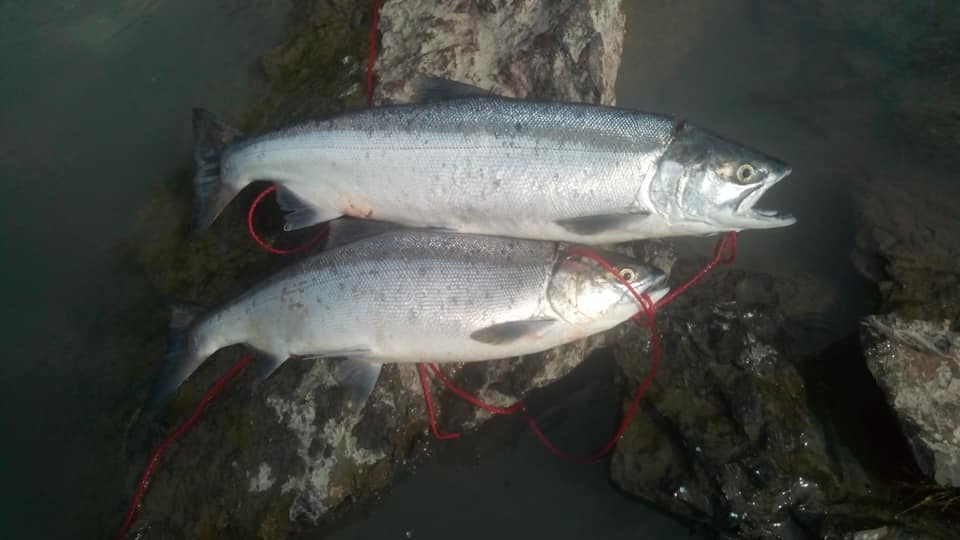
Fishing on the Kenai River (courtesy of John Winters)

Jordan Smith and Chase Lamborn, from Utah State University, recently completed a study of fire impacts on fishing in the Kenai River from the 2019 Swan Lake fire. Their study–funded by the Joint Fire Science Program— combined a literature review with interviews of local experts to identify impacts. The Kenai River is important: not only is it the most popular sportfishing destination in Alaska, averaging 275,000 angler days per year, it also produces 1/3 of the commercial salmon harvest in the Cook Inlet basin.  Smith interviewed a small but diverse group of stakeholders who had extensive experience with the KR watershed, including agency resource managers, fishing advocates, people from non-profits, tribal members, and business owners.  In addition to fire impacts, the study established a model of the Kenai River as a social-ecological system, which could be used to determine impacts from other kinds of disturbance. 

Interviewees pointed out that a certain amount of luck, such as the lack of heavy rains post-fire to add big sediment loads as well as the fire’s location missing key Chinook spawning watersheds—limited any direct reported impacts of fire on fish.  There were, however, impacts to resource users and businesses—primarily due visitors avoiding the area and road/river closures which restricted access during a brief, but critical, period of the summer. Nevertheless, a terrific early 2019 sockeye run (3-5x above preceding few years) helped to offset impacts on the sport fishery by encouraging anglers with high bag limits and success rates.

Photo: Kenai River fish (John Winters)

The literature review part of the study highlighted potential impacts to rearing and spawning habitats, water quality and fish passage.   Most sobering are examples where populations failed to recover after fire, but these are the exception, not the rule.  Adverse impacts are most likely from high-severity fires becasue they can lead to erosion and flooding. These events can induce loss of stream fishes, and generally require 3-10 years to recover when spawning habitat is affected.  For the Kenai River, early-run chinook salmon were identified as the most vulnerable to this type of event. Although Smith et al. did not directly measure water temperature, stream flow, sediments, or mercury levels following fire on the Kenai, they provide a useful literature review of examples from elsewhere.  They point out that with stream temperatures increasing and flows decreasing in the western continental US (a combination which can be deadly for fish), the threat of fire-related warming may become more serious in the future than it has been in the past.

Photo: Kenai River (John Winters)

Read the Report: JW Smith and CC Lamborn, 2022. Mapping the immediate and prolonged impacts of, and adaptation to, fire in the Kenai River fishery. Final Report: JFSP PROJECT: 20-1-01-30 (July 2022), 31 pp.

Fire Management to Reduce Carbon Emissions?

By Randi Jandt, Brendan Rogers, and Carly Phillips

This research brief is available as a standalone PDF

To thwart runaway climate warming, the global community is struggling to find strategies to limit carbon dioxide (CO2) emissions that are steeply climbing.  Increasing boreal wildfires in Alaska and Canada also threaten to increase CO2 emissions and could contribute potentially 12 gigatons to the world’s carbon headache by mid-century.

Fire Management strategy could make a difference: A research team from The Woodwell Climate Research Center and Union of Concerned Scientists wondered whether fire management offered a realistic way to slow down the release of legacy carbon in boreal forests, giving Nature and humans time to adapt and implement other mitigation strategies.  How much would it cost to keep Alaskan wildfires at their historic level, avoiding climate-induced predicted increases? And was it even possible to make a difference? In short, the study found that—yes—more fire suppression could keep nearly 1/3 (4 Gt ) of that carbon in the ground in Alaska and Canada. The study tries to estimate costs associated with carbon savings and compares them to other carbon-sparing strategies being used or planned. Project goals are below are from a presentation given to Alaskan fire managers last fall.

Download our short Research Brief above (and/or you can access the full scientific article, open access, HERE:

Phillips, et al. 2022.

Escalating carbon emissions from North American boreal forest wildfires and the climate mitigation potential of fire management.

Science Advances, Vol. 8(17), https://www.science.org/doi/10.1126/sciadv.abl7161

The Face of a Scientist

The face of a scientist: does that conjure an image of a certain gender, race, and age?  Albert Einstein perhaps?  Those stereotypes are changing:  meet Dr. Yaping Chen–a rising star of science with a spectacular track record.  The last 3 years she has come up with one mind-boggling revelation after another about how fire works in the Alaska tundra.  After a MS degree in environmental engineering in China, Dr. Chen completed her PhD in the lab of the venerable Dr. Feng Sheng Hu at the University of Illinois.  I first met her presenting a poster on the Nimrod Hill fire (Imuruk Lake, on the Seward Peninsula) at an American Geophysical Union meeting in 2019.  The work was novel, ingenious, and suggestive of new ways to study fires with new computational and remote sensing tools. That was just the tip of the iceberg–or the thermokarst, if you will! Since then Dr. Chen has published numerous diverse research studies improving our understanding of dueling post-fire successional trajectories in tundra, improved burn severity mapping of legacy tundra fires, and fire regime effects on carbon balance.  Her most recent paper outlines the role of tundra fire vs. climate warming in thawing permafrost in Alaska tundra statewide!  If you’ve missed any of these important papers for your collection, links are included below.  Now Dr. Chen is a post-doctoral researcher at the Virginia Institute of Marine Science, continuing her work on unraveling impacts of climate change.  Thank you, Dr. Chen for all you’ve revealed to us in Alaska!

Fire hastens permafrost collapse in Arctic tundra: Short AAAS summary of Chen’s most recent paper>>>

Below: Graphical Abstract from Chen, et al. 2021 One Earth publication, illustrating the increase in thermokarst rates across arctic Alaska, and highlighting impact of fire in hastening thaw.