REDapp webinar Wed, Jan 28

Canadian REDapp Fire Behavior Calculator:  A new tool for Alaska & Great Lakes fire management agencies?

Neal McLoughlin, Alberta Environment and Sustainable Resource Development, REDapp Development Lead, Edmonton, AlbertaFeatured image
Wed, January 28, 2015
11:00 am AKST

Recorded webinar available here: https://vimeo.com/118842504

REDapp is a universal fire behavior calculator developed with financial support from the Canadian Interagency Forest Fire Centre (CIFFC), and in-kind support from fire management agencies across Canada. This application is currently in a beta stage of development. A public release is expected in early 2015. Unlike WFFDS, Behave, FSPro and other more rigorous fire behavior modeling programs, REDapp is intended to provide basic fire behavior projections with minimal training. Managers introduced to REDapp at a fall workshop in Fairbanks felt the tool could be used by field operatives, dispatchers, managers, and other agency cooperators to link numerical outputs of the Canadian Forest Fire Danger Rating System (CFFDRS) with potential fire behavior and spread. Neal McLoughlin from Alberta Environment and Sustainable Resource Development will deliver an web-based demonstration of how to use REDapp. Test locations and weather data from the US will be used during the demonstration.
If you would like to try out REDapp (currently in invitation only beta), please email AFSC coordinator Alison York  for access.
What is the Weather Outlook for Early Season 2015?

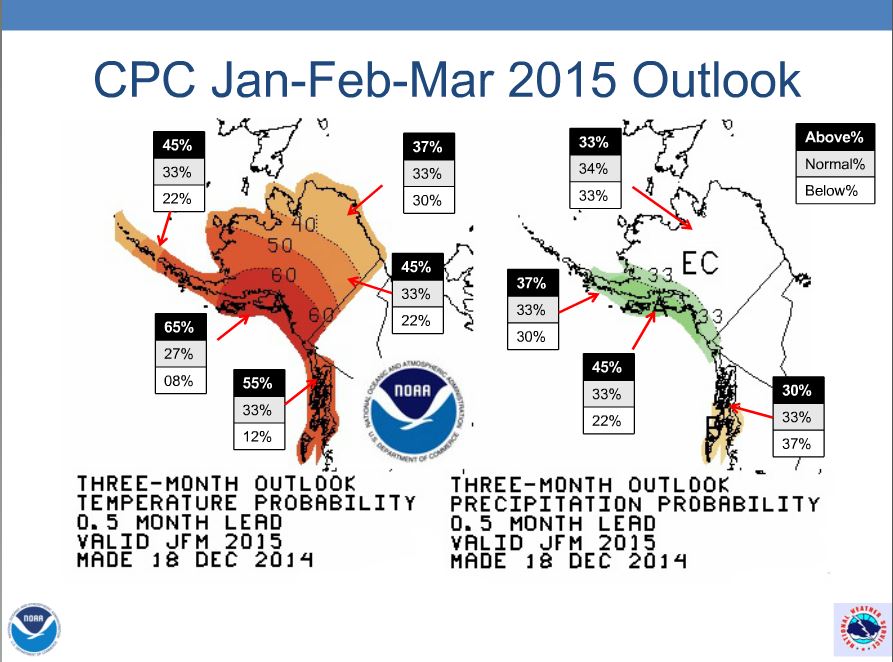
Rick Thoman, NWS Climate Scientist in Fairbanks, said “Save this one!” when he showed this slide about the CPC’s spring temperature prediction in his Dec. 19 NWS Webinar.  So I did:  it’s a pretty bold forecast for a warmer than normal early spring in much of Alaska.  Of course, it’s still hard to know what that might mean for fire season.  We know that warmer springs can be associated with premature disappearance of snow and higher fire danger in that pre-greenup season though.  On the other hand, well-timed spring rain, after the ground thaws enough to receive it, can just as easily put a damper on duff fuel moistures well into the summer.  And, it’s a lot easier to predict temperature than precipitation.  Still, when I hear the starting line-up:  PDO (Pacific Decadal Oscillation) in a warm phase, a fairly robust El Niño, and warm early spring–I can’t help but think that it could be an interesting year.  It looks like Southcentral Alaska may be in the cross-hairs again too.  Check out the latest seasonal outlooks as the season progresses at CPC’s website.

December 18th NWS prediction for spring temperature/precip in Alaska.  See the latest at www.cpc.ncep.noaa.gov/products/predictions/90day/

December 18th Climate Prediction Center Forecast for spring temperature/precip in Alaska. See the latest at http://www.cpc.ncep.noaa.gov/products/predictions/90day/

ABoVE solicitation released

Preview of “Arctic-Boreal Vulnerability Experiment (ABoVE)” copyNASA has released the first Research Announcement for the Arctic-Boreal Vulnerability Experiment (ABoVE) field campaign. NASA’s Terrestrial Ecology Program plans to support this major field campaign in Alaska and western Canada during the next 5 to 8 years.

ABoVE will seek a better understanding of the vulnerability and resilience of ecosystems and society to climate change. Map shows the domain of interest. Wildland fire is a key disturbance agent in the science plan. Letters of intent due Jan 20. More details at http://above.nasa.gov/index.html?

Webinar on Dec 4: Adventures with IFTDSS on the Kenai Peninsula

Join us for the first webinar of the season!

Shaded_Narrow_FlameLengthChange_Treated1.JPG
Lisa Saperstein, Regional Fire Ecologist

US Fish and Wildlife Service – Alaska Region

Thursday, December 4, 2014
10:00 am AKST

Register here: https://attendee.gotowebinar.com/register/3446718627144957698

This webinar explores a current effort to use the Interagency Fuel Treatment Decision Support System (IFTDSS) in Alaska for fuel treatment planning on or adjacent to the Kenai National Wildlife Refuge. In addition, IFTDSS was also used to assess the effectiveness of pre-existing fuelbreaks during the 2014 Funny River Fire as well as providing insight on how IFTDSS can inform the design of future fuel treatments.

Caption: Modeled post-treatment changes in flame length within a fuelbreak. Green pixels indicate an estimated reduction of 6 – 32 feet. Figure courtesy Lisa Saperstein.

Presentations available from the CFFDRS Summit in Fairbanks!

Capture-eam1
This presentation and MANY MORE available on fuel moisture sampling, remote sensing validation of FWI, new remote sensing tools for fire detection and growth modeling, using dataloggers on soil moisture probes to track fuel moisture changes, and the seasonality of CFFDRS, to name a few.

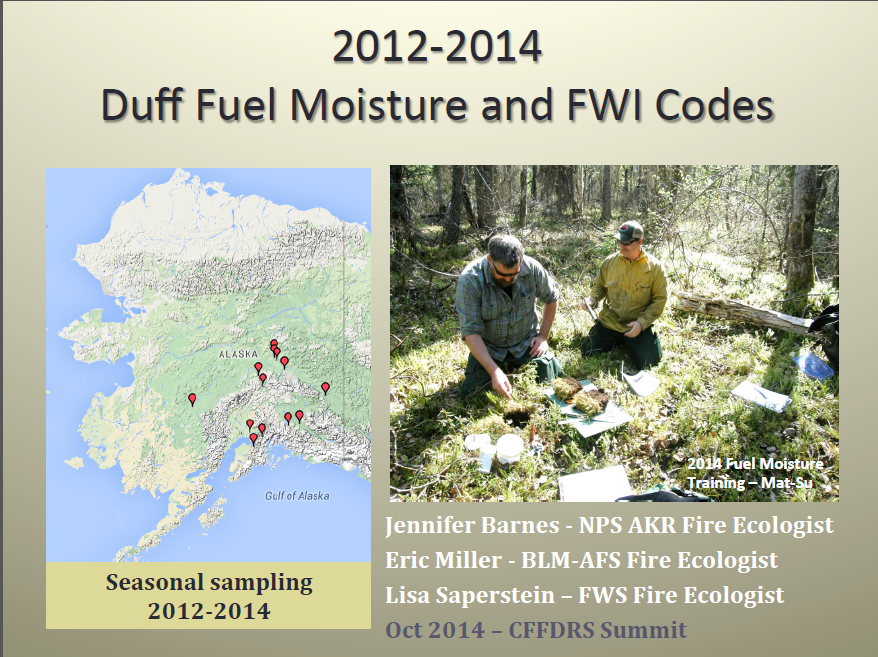
Whether you were there or missed it, the presentations and recorded videos from the  2014 Canadian Forest Fire Danger Rating System Summit held in Fairbanks October 28-30th are worth reviewing.  2014. The workshop was a great opportunity to discuss fire risk indices and fire behavior applications in Alaska and to hear how fire managers in Canada, the Great Lakes States and around the world are using the Canadian Forest Fire Weather Index System. There were over 50 managers and scientists in attendance.

Breakout group at the October 2014 CFFDRS Summit in Fairbanks

Breakout group at the October 2014 CFFDRS Summit in Fairbanks

What does the 2014 Funny River Fire mean for moose on the Kenai?

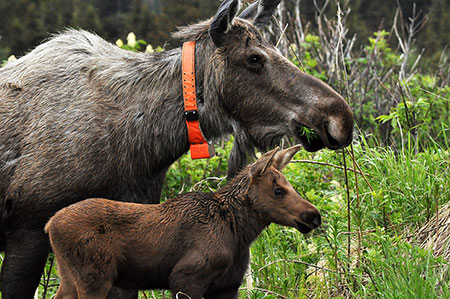
The Alaska Department of Fish and Game plans to capture 100 moose in the vicinity of the 200,000 acre Funny River Fire to monitor their response to the changes in vegetation and use of areas with different burn severities.  Past large fires in 1947 and 1969 have generally been thought to benefit moose by providing prime forage conditions during a couple decades after they burn.  Fifty moose will be fitted with GPS tracking collars to monitor movements and sensors to monitor body temperature will be used to see if recently burned areas result in “hotter” moose.  Read more about the planned research and the fire in ADF&G’s November newsletter.

Photo by Thomas McDonnough

Photo by Thomas McDonnough

Warmer Permafrost–especially in Arctic Alaska

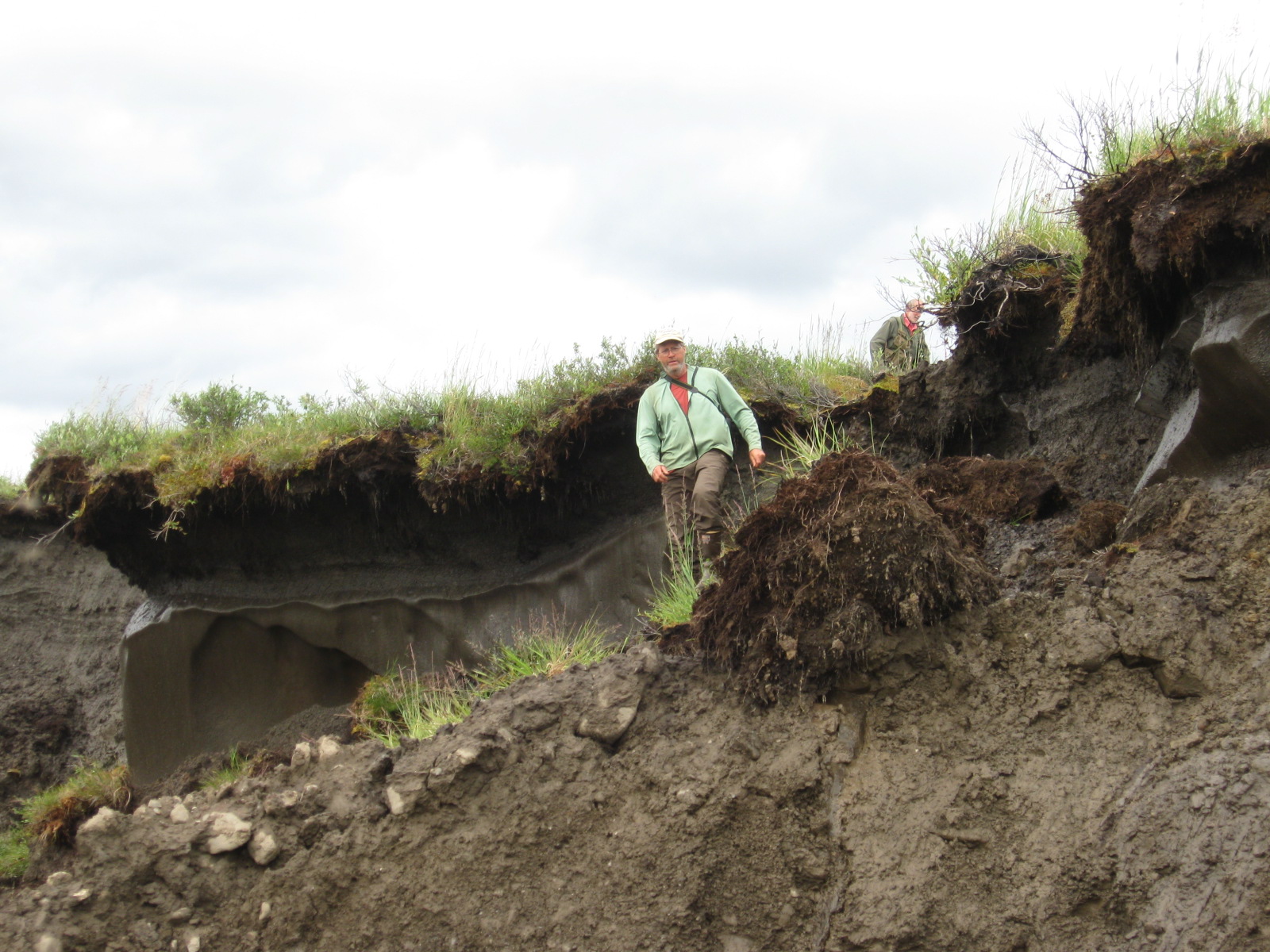
It’s hard to say what impact the recession of permafrost in the northern half of Alaska will have on fire regime.  One could presume there should be more organic moss and duff material available for combustion during the summer, which is likely to have implications for tundra fire extent and severity.  Warmer permafrost has also been linked to more extensive retrogressive thaw slumps–a kind of thermokarst which have been seen after tundra fire in ice-rich areas (photo). If you can make it, Dr. Romanovsky’s talk “Evidence of recent warming and thawing of permafrost in the Arctic and sub-Arctic, with updates on his extensive grid of permafrost monitoring wells up and down Alaska should be very interesting.  The talk is Oct 23 at Elvey Auditorium, University of Alaska-Fairbanks, at 4 pm ADT.

Photo by R. Jandt, 2010

UAF scientist Dan Mann examines fire-induced thermokarst 3 years after Anaktuvuk River fire in arctic Alaska.

Fire Improves Bison Habitat for Farewell Herd

Capture-bisonIn 2010 almost 100,000 acres burned around Farewell Lakes–you may recall the “Turquoise Lake” fire.  If you’re interested to see what effect this is having on the Farewell bison herd, check the October 2014 issue of the Alaska Department of Fish and Game newsletter <HERE>.

New safety zone recommendations

Critical New Research Expands Size of Wildland Firefighter Safety Zones

The Joint Fire Science Program has supported the wildfire safety zone work of Bret Butler, a research engineer at the Missoula Fire Sciences Laboratory. Bret recently reviewed current guidelines and is leading development of new guidelines that will link slope, wind, and fire intensity to safety zone size.

A preliminary safety zone rule from this effort is now available, based on current findings relative to energy transport from wildland fire in the presence of slope and wind. The calculation is based on vegetation height rather than flame height.

Although results are preliminary and subject to change, this new research significantly expands the safety zone for many situations and should be used to provide an extra margin of safety for all wildland fire personnel.

Learn more here: http://www.firelab.org/project/firefighter-safety-zones

Click to access 07-2-1-20_Safety_zones_07112014.pdf

Graduate Thesis Defense by Aditi Shenoy

Role of fire severity in controlling patterns of stand dominance following wildfire in boreal forests

Wednesday, 25 June 2014 1:00PM
O’Neill Bldg, rm 201, Vera Alexander Learning Center, UAF
(If you can’t make it live, we hope to post a recording)
http://www.iab.uaf.edu/