Warmer Permafrost–especially in Arctic Alaska

It’s hard to say what impact the recession of permafrost in the northern half of Alaska will have on fire regime.  One could presume there should be more organic moss and duff material available for combustion during the summer, which is likely to have implications for tundra fire extent and severity.  Warmer permafrost has also been linked to more extensive retrogressive thaw slumps–a kind of thermokarst which have been seen after tundra fire in ice-rich areas (photo). If you can make it, Dr. Romanovsky’s talk “Evidence of recent warming and thawing of permafrost in the Arctic and sub-Arctic, with updates on his extensive grid of permafrost monitoring wells up and down Alaska should be very interesting.  The talk is Oct 23 at Elvey Auditorium, University of Alaska-Fairbanks, at 4 pm ADT.
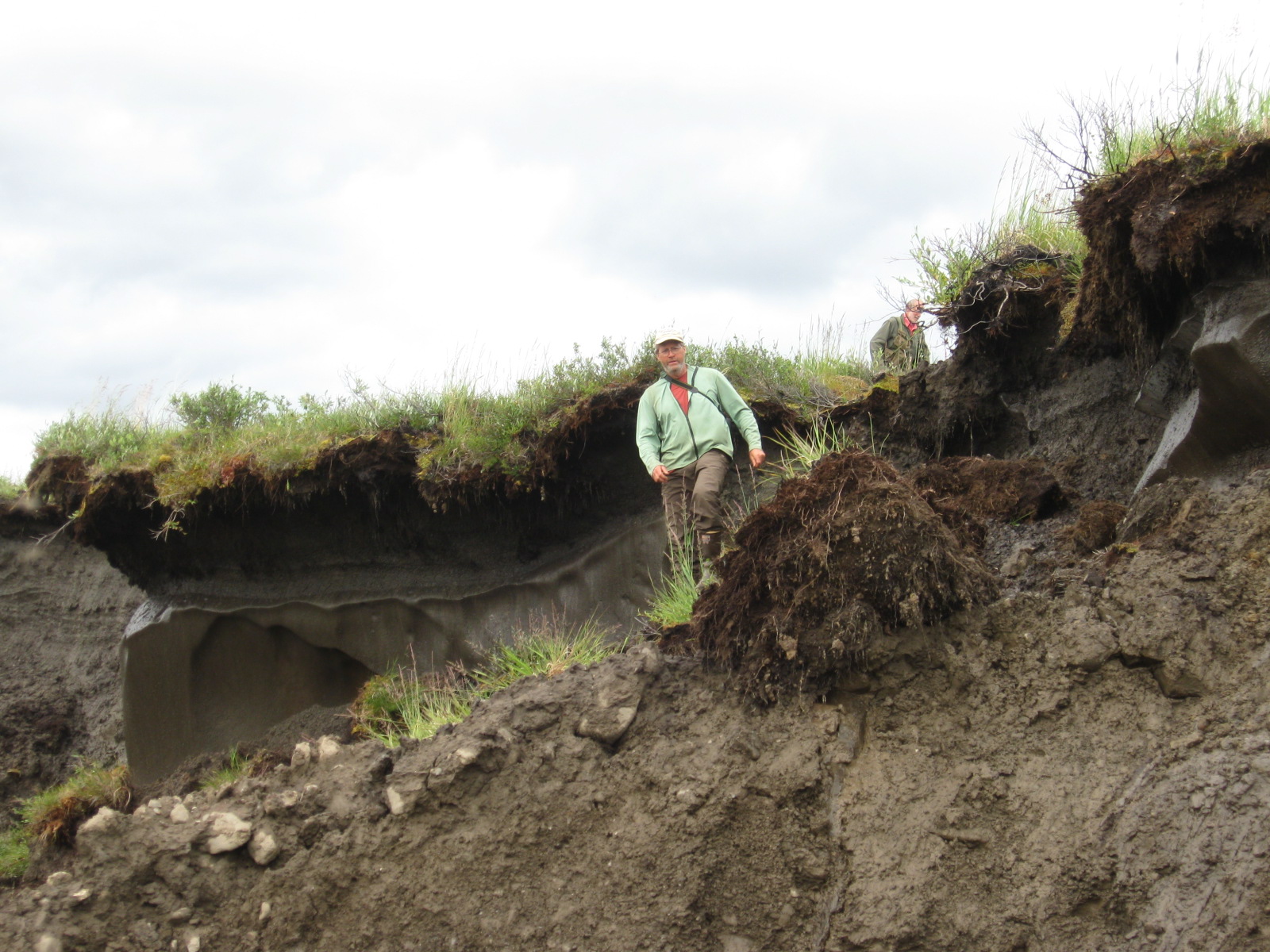
Photo by R. Jandt, 2010

UAF scientist Dan Mann examines fire-induced thermokarst 3 years after Anaktuvuk River fire in arctic Alaska.

Research Brief: New Satellite Sensors for Wildfire Mapping and Monitoring

UNIversity FORmation Mission 1--microsatellite designed by Hokkaido University for wildfire management (photo:  Koji Nakau)

UNIversity FORmation Mission 1–microsatellite designed by Hokkaido University for wildfire management (photo: Koji Nakau)

Hokkaido University (HU) is one of the world leaders in developing new earth-observing space technology. Dr. Koji Nakau leads their wildfire remote sensing applications team. He’s working with various partners—including UAF—on new satellite-derived products delivered to wildland fire managers in Alaska and around the world.  They are especially excited about the May 24th (2014) launch of a rocket carrying ALOS-2 (Advanced Land Observing Satellite) which is also carrying a couple microsatellites with sensors specifically designed by his team to detect wildfire signatures. In addition to improving real-time operational support, satellite data is analyzed in support of wildfire propagation modeling, smoke transport, fuels estimates, and post-fire ecology.

Read About the New Satellites>>  |  Download Research Brief PDF (744 kb)