A group of prominent researchers just analyzed data from a large number of burned field sites in Alaska, collected from 2021-2023. The Bonanza Creek Long-Term Ecological Research program at UAF has been funded by the National Science Foundation since 1987 and they have established an impressive network of fire effects plots across interior Alaska. For this analysis on the fate of stored carbon they examined 555 recently (within 7 years) burned plots contained in 31 separate fires across diverse boreal forests, with pre-burn stand ages ranging from 11-254 years. Including the most recent burn, 26 of the sites burned 3 times according to fire records and ecological data.
The analysis indicated that increasing fire frequency and reburning will significantly reduce C storage capacity through progressive consumption of more biomass (mainly duff) with subsequent fire events, as well as shift forested toward non-forested landscapes. Part of the C loss results from the second fire consuming the fallen burned trees from the previous fire. Under the unique conditions that prevail in the boreal landscape, these logs are typically overgrown and buried by moss in a couple decades. There, the cold, acidic environment slows decay so that this wood can be preserved for centuries, but when fire returns to the site quickly the woody debris is consumed before it can be buried in the “bank”.
In short, a recovery period of < 70 years between fire events is not sufficient to reaccumulate C stores in the forest floor between fires and makes it likely that legacy C will be lost with each subsequent fire.
The Alaska Wildland Fire Coordinating Group, representing agencies and land managers involved in managing wildfire has a Fire Research and Applications Committee (FRDAC). Periodically, the committee surveys members and collaborators to see what they consider to be the most important current areas of wildland fire research in the Alaska region. Science providers, in particular, may be interested in this management perspective on research. At last week’s interagency Fall Fire Review, committee chair Jennifer McMillan discussed top-ranked categories of fire effects, fuel treatments, and environmental/land cover change identified by the survey. For example, AWFCG members expressed interest in more research into fire effects on moose/caribou populations, subsistence lifestyles, migration patterns and berry production. For fuel treatments, the areas identified were treatment longevity and effectiveness, maintenance, and biodiversity and habitat responses. Expanded briefs (with citations) on 3 critical research gaps are located on our partner page for FRDAC: https://www.frames.gov/afsc/partners/frdac/research-needs
New data compiled in NOAA’s 2024 Arctic Report card illuminates the delicate balance between boreal/arctic regions production of carbon dioxide (especially fire smoke and microbial respiration) and it’s uptake (by photosynthesizing vegetation). This balance is sensitive to ambient temperature, and of course is influenced in various ways by wildfire. Slowing down the atmospheric increase in CO2 from burning fossil fuels has taken on some urgency as we see more and more adverse impacts from warmer atmosphere and oceans due to its greenhouse effects. Land management and fire management may have a role to play, especially as we race to develop alternative energy sources. Take a look at this well-illustrated 8-p summary to bring yourself up to speed with what’s happening with carbon in the north country. Link to the report: https://doi.org/10.25923/0gpp-mn10
“When including wildfire emissions, the Arctic tundra region has shifted to a carbon dioxide (CO2) source and is a consistent methane (CH4) source.” (Natali et al. 2024, NOAA Technical Report OAR ARC ; 24-11)
Photo by R. Reanier: Anaktuvuk R Fire, July 14, 2007
Download the latest Roundup with brief highlights of new publications that may interest the Alaska fire science and management community HERE. The fall Roundup includes links to articles on improvements in ranking fire risk around communities and structures, new findings on changes in fire regime in Alaska and Canada, implications of increases in high latitude fire on the atmosphere, and interesting findings on toxic components in fire retardant chemicals. Here’s the URL to a downloadable version:
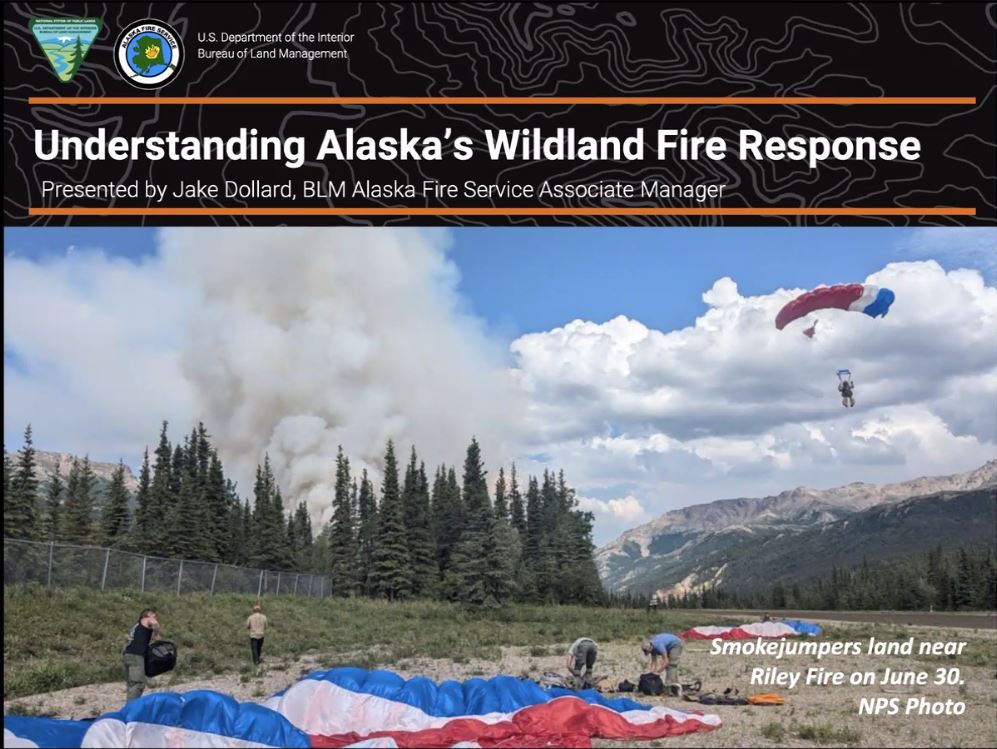
Also, if you missed this webinar, be sure to check out the recorded presentation “Spark to Strategy“–by Rick Thoman (ACCAP) and Jake Dollard (Alaska Fire Service) on the 2024 fire season and how fire management plans turn into actions in Alaska.
Caribou lichens, Cladonia (Cladina) spp., are a slow-growing, vital winter forage for caribou. They are commonly called “reindeer moss” but aren’t really moss. And they are important to both reindeer and to caribou. Eric Palm (2022), for his PhD thesis, used GPS-collared caribou locations from several agencies in Alaska to show that caribou strongly avoided burned areas, especially in winter, and that their preference was related to lichen abundance. He concluded that: “caribou will experience increasing winter habitat loss as fire frequency and severity increase [in a warmer climate]. . . .We suggest that management strategies prioritizing protection of core winter range . . . would provide important climate-change refugia for caribou.” In a separate study, Matt Macander et al. (2020) demonstrated effective satellite mapping of lichen-rich ranges in Alaska, and his analyses also reinforced the caribou preference for habitat areas with >30% lichen cover.
Often you hear that lichens are only important in winter, but Libby Ehler (2021) used GPS video collars as well as diet analysis from droppings to show that lichens dominated caribou summer diet for the Alaska Fortymile Herd: 59% of composition of fecal pellets and 39% of observed foraging on the video collars in summer was lichen (vs. 37% shrubs). Only in June and July did the videos record a little more browsing on shrub than lichen, and in winter caribou expend a lot of energy locating and digging for rich patches of ground-hugging lichens. Previous studies demonstrated similar diet dominance by lichens in other herds in Alaska and Canada.
Now, in a new study, Liming He, of Natural Resources Canada, has documented large-scale decline in these lichen habitats in Eastern Canada. His study derived caribou lichen cover maps for two time periods ~30 years apart (1980’s, & 2020’s) using Landsat satellite imagery for a large area including several boreal caribou population ranges. Lichen cover declined in 62% of the region evaluated and increased in 11%. Fires were responsible for a quarter of the decrease, even in a region of Canada where fires have been relatively rare. The larger part (3/4) remains unexplained, with warming-induced shrub encroachment high on the list of suspects. Although we do not yet have a comparable study for Alaska, Macander et al. (2022) found lichen had declined 13% as a plant functional type in Alaska from 1985-2020, in a study that also used Landsat satellite data.
Taken together, these studies should alert wildlife and land managers about a possible habitat crisis on the horizon for Alaska’s 2nd largest subsistence resource. Indeed, most caribou herds across North America are experiencing declines, including the Western Arctic Caribou herd—once Alaska’s largest—featured in a recent Alaska Beacon article. The George River Caribou Herd in eastern Canada was the world’s largest in the 1990’s (800,000 animals) but by 2022 was down to just 7,200. Part of that herd’s decline is thought to be based on habitat degradation from overuse.
Alaska Midnight Sun crew boards a bus to head for a Canadian fire assignment June 4, 2023 (Photo credit: Beth Ipsen, BLM Alaska Fire Service)
Why is the Alaska fire season so quiet this year while Canada has major wildfires? Alaska climatologist Rick Thoman attributes the lack of fires in Alaska (only 934 acres burned by the end of June) to a lack of lightning as well as cooler, moister weather this year (Alaska June 2023 Sea Ice and Wildfire). Interesting that this year Alaska retained a lot more sea ice in the Chukchi sea and Arctic Ocean above Barrow: there is some evidence linking regional climate to sea ice concentration (Zou, et al. 2021). Meanwhile, Canada is breaking records with 22.7 million acres burned (9.2 million ha) as of July 9. CiFC (https://ciffc.ca/) reports 3,678 fires spread across the entire country. Canadian and US cities (including Detroit, Pittsburgh, and Chicago) have been suffering poor air quality for much of the mid-summer with little relief in site. Is there an explanation for the unusual pattern? The global temperature anomaly for May (figure) may be one clue. Strong linkages have been found between warm temperatures and wildfire activity, mainly because of accelerated drying of vegetation fuels. In the western US, Abatzoglou and Williams (2016) found that human-caused climate change caused over half of the documented increases in fuel aridity since the 1970s and doubled the cumulative forest fire area since 1984. At any rate, 2023 brought very little snow to eastern Canada, so it melted early and Fire Weather Indices have been unusually high.
Figure from Scott Duncan (ScottDuncanWX@twitter.com)
Fire regime is changing in other parts of the world. Rebecca Scholten is finishing up a PhD in Amsterdam studying weather patterns which correlate with fire activity around the north, especially arctic areas. She’s noted that changes in the polar jet stream driven by warming global temperature seem to be correlated with more wildfire in northern tundra ecosystems. A simplified explanation would be that a “wobbly” polar jet stream caused by weaker cold sink over the Arctic can mean calming in mid-latitudes but intense heat domes, dry and windy conditions, and more convection over high northern latitudes. There seems to be a strong link with these conditions and the Siberian megafires in 2019-2021. Her recent paper in Science points to accelerating changes in high latitudes with earlier snowmelt and a tripling in the frequency of this “Arctic front jet pattern.” Curiously, when this pattern sets up, it may moderate conditions–at least with respect to winds–over interior Alaska!
Citations:
Zou, et al 2021. Increasing large wildfires over the western United States linked to diminishing sea ice in the Arctic. Nat Commun 12, 6048. https://doi.org/10.1038/s41467-021-26232-9
Abatzoglou and Williams. 2016. Impact of anthropogenic climate change on wildfire across western US forests. PNAS 113 (42) 11770-11775. https://doi.org/10.1073/pnas.1607171113
Scholten, R.C. et al. 2022. Early snowmelt and polar jet dynamics co-influence recent extreme Siberian fire seasons. Science 378, 1005–1009. https://doi.org/10.1126/science.abn4419
See also p. 24 WFOctNovDec2022 for updates on fuel break projects on the Kenai by Tracy Robillard.
Please also note a great Post-Doc opportunity with one of AFSC’s collaborating scientists to study boreal climate change impacts and mitigation methods. It pays well (~$68,000 year for two years) and comes with a lot of flexibility and opportunities for global scale collaboration. The ad is here: https://www.edf.org/jobs/cooley-postdoctoral-science-fellow
In one handy paper that came out in 2021, Alaska fire analysts Robert “Zeke” Ziel and Chris Moore have compiled how-to’s, resources, fuel model-to-vegetation type crosswalks, and pro tips and secrets. The reference takes you all the way from introduction to the Canadian Forest Fire Danger Rating system to how to conduct an analysis of fire behavior in WFDSS (Wildfire Decision Support System used by fire agencies). Included are such perplexing topics as how to estimate live and dead fuel moisture, what are the available short-term and near-term fire models, what do do about winds, which National fuel models require “tweaking” in Alaska, and sources of vegetation map products and satellite imagery. Fire behavior analysts definitely want to review this before the fire season and make sure it’s handy in their kit if they plan to work in Alaska, and researchers will also find this an extremely useful state-of-the-art comprehensive review of how fire behavior analysis currently works in practice.
From the authors: “Alaska is faced with a unique fire management problem that has been handled in an interagency way for more than 30 years. The evolution of fire management has led to a different approach in interagency cooperation; weather data management; fire behavior and fire danger implementation; GIS management; and overall fire suppression strategies. This guide is intended to provide standardized inputs for initial analysis; these are not hard and fast rules to be strictly followed throughout an incident.”
At the November, 2021 Association of Fire Ecology Conference, Erin Belval from the USFS Rocky Mountain Research Station summarized results of surveys conducted with interagency hotshot crews, tallying their assessment of the effectiveness of several measures used to mitigate the spread of Covid-19 in 2020. For example, most respondents said they preferred virtual check-in and paperwork (although 25% had some problems with it). Fully 75% of respondents thought virtual briefings were as effective as in person and/or saved time. When asked: “Did you prefer the single large incident command post (ICP), or spike camps or multiple smaller operating bases?” crews showed a strong preference for spiking out on the line, with the resources of a full ICP supporting them. The presentation was titled Interagency Hotshot Crews views of new practices developed to address COVID-19 and you can view it on YouTube (one of several presentations available from a social and ecological resilience to wildfire session) HERE>>>>>: https://www.youtube.com/watch?v=hoGdcP9GTyU&t=4763s
Wash station and dining tent at a small ICP operation, Parks Highway Fire, Alaska
A new study just published in Sustainability surveyed Fairbanks Northstar Borough and Kenai Peninsula Borough homeowners about their willingness to pay for types of fuelbreaks on their property, their neighbor’s property and how public land treatments nearby affected their choices. Molina et al. found that surveyed homeowners (n=358) had a greater willingness-to-pay for fire hazard reduction when a moderate number of neighbors (1-4 neighbors) engaged in property mitigation. They were less enthusiastic when nobody else was participating, or on the other hand–when they perceived too many neighbors were clearing fuels. Shaded fuel breaks–like thinning treatments–were preferred to clearcutting. Read the article (open access) here: https://www.mdpi.com/2071-1050/13/21/11754/htm
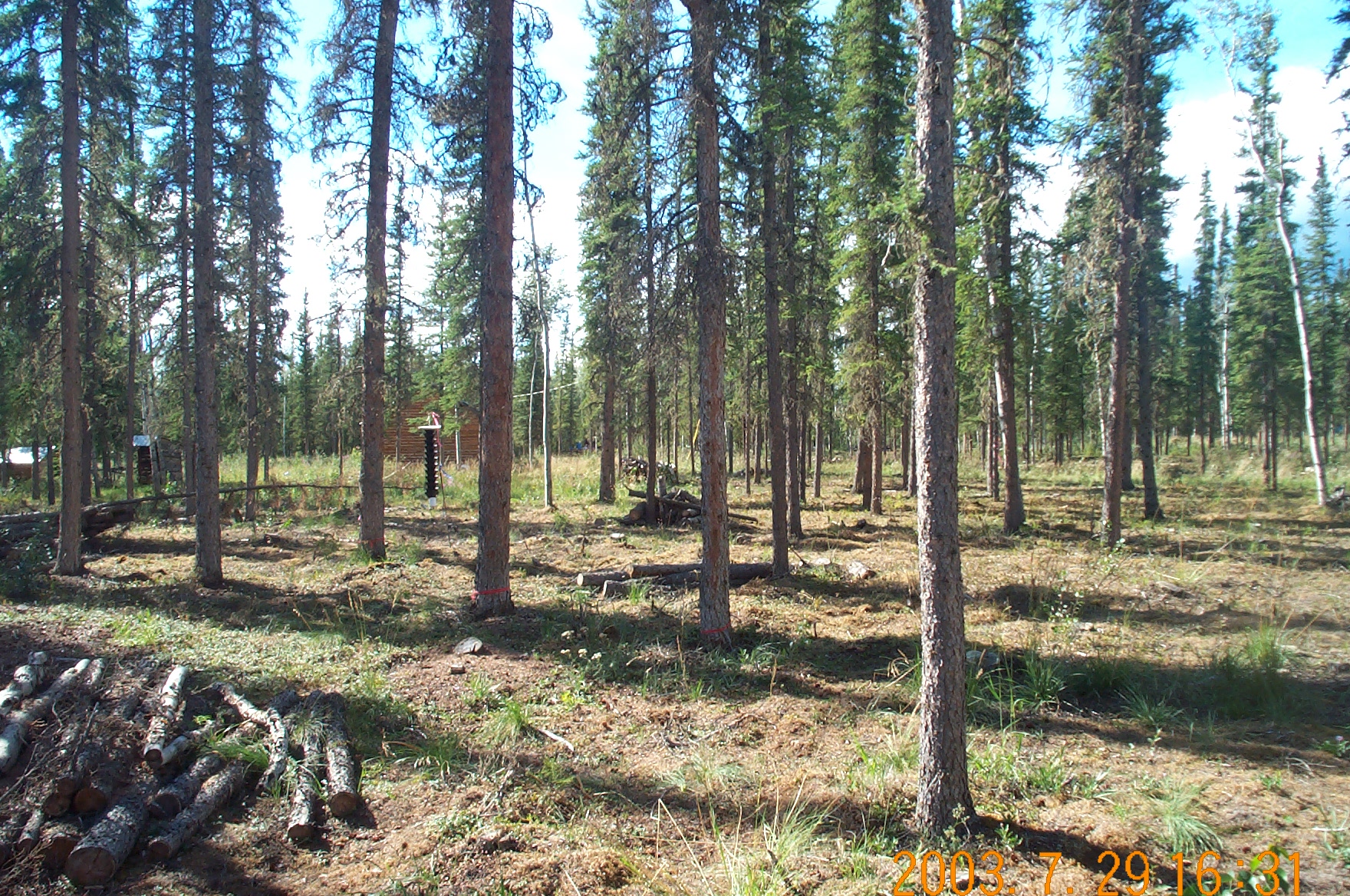
Fuelbreak around Tanacross, Alaska
Molina A, Little J, Drury S, Jandt R. Homeowner Preferences for Wildfire Risk Mitigation in the Alaskan Wildland Urban Interface. Sustainability. 2021; 13(21):11754. https://doi.org/10.3390/su132111754







 AK Fire Science Highlights