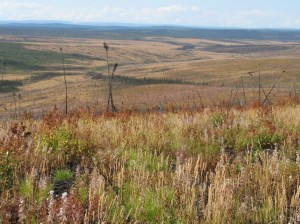
More Catastrophic Fires Ahead for Western U.S.

News from Science Daily:

More Catastrophic Fires Ahead for Western U.S..

Read the Full Journal Article:

J. R. Marlon, P. J. Bartlein, D. G. Gavin, C. J. Long, R. S. Anderson, C. E. Briles, K. J. Brown, D. Colombaroli, D. J. Hallett, M. J. Power, E. A. Scharf, M. K. Walsh. PNAS Plus: Long-term perspective on wildfires in the western USA. Proceedings of the National Academy of Sciences, 2012; DOI: 10.1073/pnas.1112839109

Direct from the Source:

Inside NAU (Northern Arizona University)

Once Burned, Twice Shy: Webinar Wrap Up

Here’s a big Thank You to everyone who attended last week’s webinar “Once burned, twice shy”, presented on Feb. 23rd.  For those who could not attend or who have been eagerly awaiting the follow up materials, please feel free to  explore the videos, documents and links below.  (For more information, see our previous post on this webinar.)

In Summary

This slideshow requires JavaScript.

(Slides by Dr. Carissa Brown.)

Continue reading

Once burned, twice shy: Repeat fires result in black spruce regeneration failure (Webinar)

A re-burned fire with little to no black spruce regeneration, 2007. Photo courtesy of C. Brown.

Dr. Carissa Brown, Postdoctoral Researcher at the University of Sherbrooke, will be joining us for a webinar on February 23, 2012 (11:00 am to noon AKST) entitled “Once burned, twice shy: Repeat fires result in black spruce regeneration failure.”  Dr. Brown is currently studying plant species and communities at the edge of their range, focusing on the direct and indirect effects of climate change on species distribution at northern latitudes. Most recently, her work has focused on the responses to altered fire frequency at the northern margin of the boreal forest, particularly in black spruce forests.

Link to recording <HERE>

Continue reading

Rapid rise in wildfires in large parts of Canada? Ecologists find threshold values for natural wildfires

Photo from Science Daily, Credit Evgney Dubinchuk/Fotolia

"A rapid rise in wildfires has been predicted for a large part of Canada" (Credit:Evgeny Dubinchuk/Fotolia) (Photo from Science Daily)

News from Science Daily:

Rapid rise in wildfires in large parts of Canada? Ecologists find threshold values for natural wildfires.

Read the Journal Article behind this summary:

1. Richard D. Zinck, Mercedes Pascual, Volker Grimm. Understanding Shifts in Wildfire Regimes as Emergent Threshold Phenomena. The American Naturalist, 2011; 178 (6): E149 DOI: 10.1086/662675

November 2011 Fire Science Publications

Can’t seem to stay up to date?  Let us do some of the work. 

We’ve put together a bibliography of November’s (plus or minus a few weeks) new fire science publications related to Alaska and the boreal forest.  Download a simple bibliography or an annotated version, both in a pdf format including URLs for each reference.  Just want the highlights? We showcased a few of our “Top Picks” below. 

November 2011 Fire Publications – Bibliography (pdf)

November 2011 Fire Publications – Annotated Bibliography (pdf)

Our “Top Picks”

Werth, Paul A.; Potter, Brian E.; Clements, Craig B.; Finney, Mark A.; Goodrick, Scott L.; Alexander, Martin E.; Cruz, Miguel G.; Forthofer, Jason A.; McAllister, Sara S. 2011. Synthesis of knowledge of extreme fire behavior: volume I for fire managers. Gen. Tech. Rep. PNW-GTR-854. Portland, OR: U.S. Department of Agriculture, Forest Service, Pacific Northwest Research Station. 144 p.


Continue reading

New Video on Climate and Fire in Alaska

Watch this new video on Climate and Fire in Alaska, featuring Dr. Scott Rupp, UAF Professor, and Jennifer Barnes, NPS Fire Ecologist!

This video is 1 of a 5 part video series entitled Climate Change Watch  (produced by Frontier Scientists and Wonder Visions).   The Climate Change Watch series includes the following videos:  Classrooms for Climate, Changing Biomes (In Production),  Hydrology (In Production),  Permafrost (In Production), and Fire in Alaska.

Continue reading

2011 Alaska Fire Science Workshop Podcasts Now Available!

This slideshow requires JavaScript.

Watch these podcasts from the 2011 Alaska Fire Science Workshop!

Continue reading

“Projected Vegetation and Fire Regime Response to Future Climate Change in National Parks in Interior Alaska”

Excerpt from: Loya, W., Springsteen, A., Barnes, J., and S. Rupp. Projected Vegetation and Fire Regime Response to Future Climate Change in National Parks in Interior Alaska. Alaska Park Science 10:1 (22-25).

Climate change presents a significant challenge to managing our natural and cultural resources. Ecological models that project effects of climate change on plants, animals, and other system components can be used by managers to understand how these effects will impact park resources.

6,000 Years of Tundra Fires in Noatak National Preserve

One of the 37 tundra fires that burned in Noatak National Preserve in the summer of 2010. The Kaluktavik River fire (Fire #561) burned more than 23,000 acres (9,300 ha) in July. Photo from Alaska Park Science.

Excerpt from: Higuera, P., Barnes, J., Chipman, M., Urban, M., and F.S. Hu. The Burning Tundra: A Look Back at the Last 6,000 Years of Fire in the Noatak National Preserve, Northwestern Alaska. Alaska Park Science 10 (1):  36-41.

Continue reading

“Recovery After World’s Largest Tundra Fire Raises Questions”

From the Alaska Science Forum by Ned Rozell:

Four summers ago, Syndonia Bret-Harte stood outside at Toolik Lake, watching a wall of smoke creep toward the research station on Alaska’s North Slope. Soon after, smoke oozed over the cluster of buildings.

The great Anaktuvuk River tundra fire of 2007. Photo by Michelle Mack. (From Alaska Science Forum)

To read more of this article click here or visit the Alaska Science Forum website to view all of Ned’s recent articles.

What to know more?  Check out our previous post on the Anaktuvuk  River Fire with links to Michelle Mack’s research findings and other news articles.