ABoVE solicitation released

Preview of “Arctic-Boreal Vulnerability Experiment (ABoVE)” copyNASA has released the first Research Announcement for the Arctic-Boreal Vulnerability Experiment (ABoVE) field campaign. NASA’s Terrestrial Ecology Program plans to support this major field campaign in Alaska and western Canada during the next 5 to 8 years.

ABoVE will seek a better understanding of the vulnerability and resilience of ecosystems and society to climate change. Map shows the domain of interest. Wildland fire is a key disturbance agent in the science plan. Letters of intent due Jan 20. More details at http://above.nasa.gov/index.html?

Webinar on Dec 4: Adventures with IFTDSS on the Kenai Peninsula

Join us for the first webinar of the season!

Shaded_Narrow_FlameLengthChange_Treated1.JPG
Lisa Saperstein, Regional Fire Ecologist

US Fish and Wildlife Service – Alaska Region

Thursday, December 4, 2014
10:00 am AKST

Register here: https://attendee.gotowebinar.com/register/3446718627144957698

This webinar explores a current effort to use the Interagency Fuel Treatment Decision Support System (IFTDSS) in Alaska for fuel treatment planning on or adjacent to the Kenai National Wildlife Refuge. In addition, IFTDSS was also used to assess the effectiveness of pre-existing fuelbreaks during the 2014 Funny River Fire as well as providing insight on how IFTDSS can inform the design of future fuel treatments.

Caption: Modeled post-treatment changes in flame length within a fuelbreak. Green pixels indicate an estimated reduction of 6 – 32 feet. Figure courtesy Lisa Saperstein.

Warmer Permafrost–especially in Arctic Alaska

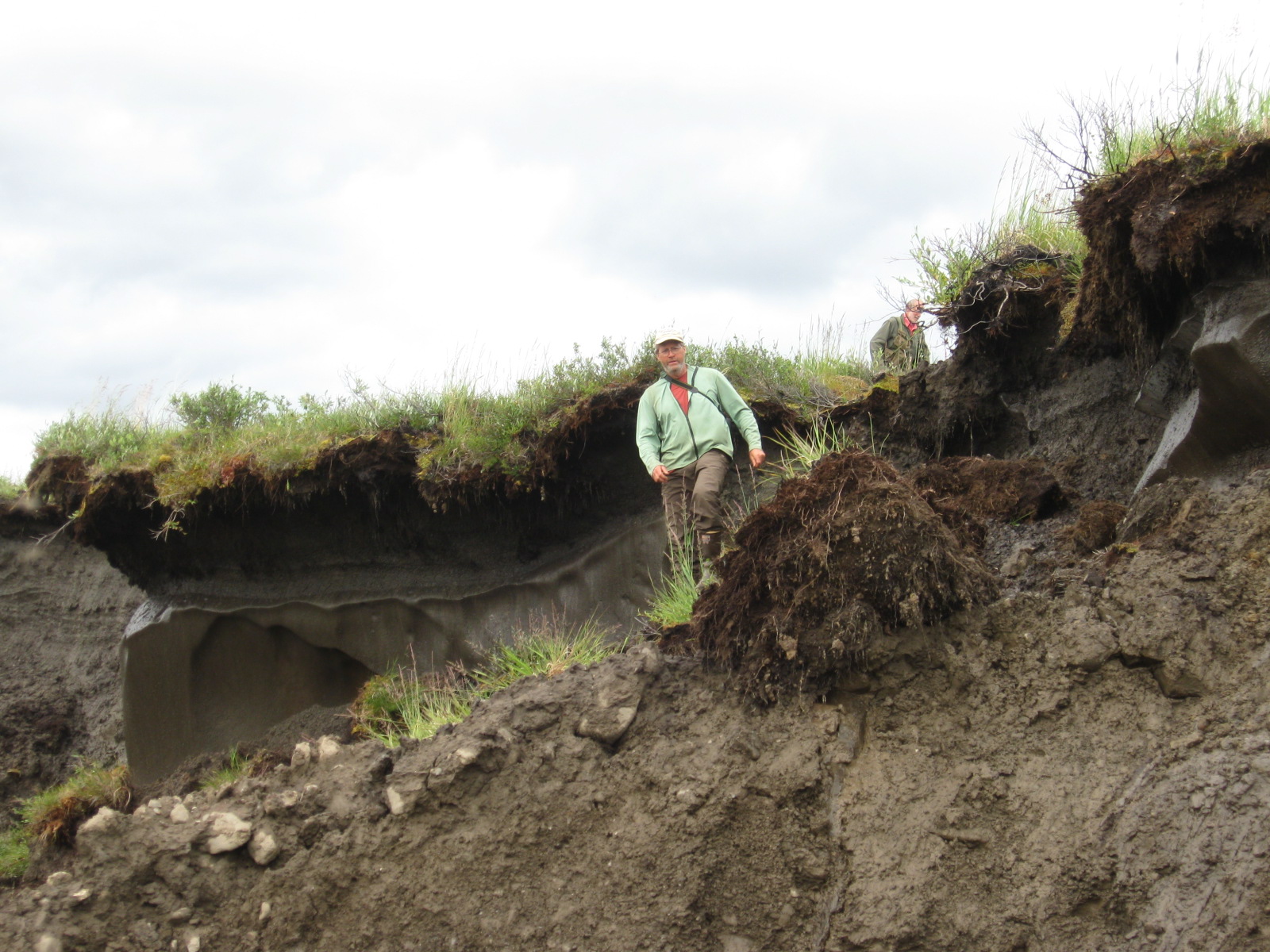
It’s hard to say what impact the recession of permafrost in the northern half of Alaska will have on fire regime.  One could presume there should be more organic moss and duff material available for combustion during the summer, which is likely to have implications for tundra fire extent and severity.  Warmer permafrost has also been linked to more extensive retrogressive thaw slumps–a kind of thermokarst which have been seen after tundra fire in ice-rich areas (photo). If you can make it, Dr. Romanovsky’s talk “Evidence of recent warming and thawing of permafrost in the Arctic and sub-Arctic, with updates on his extensive grid of permafrost monitoring wells up and down Alaska should be very interesting.  The talk is Oct 23 at Elvey Auditorium, University of Alaska-Fairbanks, at 4 pm ADT.

Photo by R. Jandt, 2010

UAF scientist Dan Mann examines fire-induced thermokarst 3 years after Anaktuvuk River fire in arctic Alaska.

New safety zone recommendations

Critical New Research Expands Size of Wildland Firefighter Safety Zones

The Joint Fire Science Program has supported the wildfire safety zone work of Bret Butler, a research engineer at the Missoula Fire Sciences Laboratory. Bret recently reviewed current guidelines and is leading development of new guidelines that will link slope, wind, and fire intensity to safety zone size.

A preliminary safety zone rule from this effort is now available, based on current findings relative to energy transport from wildland fire in the presence of slope and wind. The calculation is based on vegetation height rather than flame height.

Although results are preliminary and subject to change, this new research significantly expands the safety zone for many situations and should be used to provide an extra margin of safety for all wildland fire personnel.

Learn more here: http://www.firelab.org/project/firefighter-safety-zones

Click to access 07-2-1-20_Safety_zones_07112014.pdf

Graduate Thesis Defense by Aditi Shenoy

Role of fire severity in controlling patterns of stand dominance following wildfire in boreal forests

Wednesday, 25 June 2014 1:00PM
O’Neill Bldg, rm 201, Vera Alexander Learning Center, UAF
(If you can’t make it live, we hope to post a recording)
http://www.iab.uaf.edu/

Abstract deadline extended to May 15 for Wildland Fire Canada 2014

Wildland Fire Canada 2014
October 7-9th, 2014
Marriott Harbourfront Hotel, Halifax, Nova Scotia
WildlandFireCanada.ca
 
The Program Committee has extended the deadline for abstracts to May 15. The committee is currently accepting abstracts on, but not limited to, the following:
•Historic Fires – Learning from Our Past
•Risk Management and Multiple Disturbances in a Changing Climate
•Fire and the Natural Resource and Utilities Sectors
•Society and Fire
•Accountability at the Local, Provincial, National and International Levels

Abstract submission instructions at wildlandfirecanada.ca (note that the site still shows a deadline of April 15, hopefully this will be updated shortly).

Invitation to participate in the Joint Fire Science Program Knowledge Exchange Evaluation

You are invited to participate in the national evaluation of the JFSP fire science consortia. We hope you can take the time to fill out the survey – getting a variety of responses really does help to justify our program’s ongoing funding, and getting your feedback helps us to do our job more effectively. Thanks for taking the time. The survey link is:
https://www.surveymonkey.com/s/MN92YNB

If you were at AFSC’s workshop last week, you heard us offer a chance to win “fabulous” prizes for responding to the survey. Sorry to report we just learned that offer conflicts with the survey protocol, so please do NOT notify us that you have answered the survey. But we will offer chances for “fabulous” prizes to folks who like the AFSC Facebook page before April 28. Thanks!


Here’s the official invitation from the evaluation team at University of Nevada:
We invite you to participate in the continuing evaluation of the Joint Fire Science Knowledge Exchange Program. This web-based survey focuses on the communication and application of fire science research results and resources. We are specifically interested in knowing about your opinions and experiences with the Fire Science Consortium in your region. This project is based out of the University of Nevada, Reno and includes all of the JFSP Consortia around the country. Your responses will be used to help the JFSP Consortia address your fire science information needs and ultimately enhance fire science delivery.

The survey will take approximately 10 to 15 minutes to complete. We realize that some of you may have completed a version of this survey in the past. Continued participation of prior respondents and participation from new respondents is essential in helping the JFSP consortia progress towards their goals. Your participation in this study is voluntary, and all of your responses will remain completely confidential. Please click on the following link or copy  and paste the link into your web browser:

https://www.surveymonkey.com/s/MN92YNB

If you have any questions or problems accessing the survey, please contact Evaluation Coordinator Lorie Sicafuse at lsicafuse@unr.edu, telephone (775) 327-2397.

Thank you for your time and involvement in helping us learn more about how to improve fire science delivery and communication in your region.

Loretta Singletary, Ph.D., Extension Educator and Professor, University of Nevada Cooperative Extension (singletaryl@unce.unr.edu)

Bill Evans, Ph.D., Professor of Educational Psychology, Counseling, and Human Development, University of Nevada, Reno (wevans@unr.edu)

Lorie Sicafuse, Doctoral Candidate, Interdisciplinary Social Psychology, University of Nevada, Reno (lsicafuse@unr.edu)

Lisa Maletsky, MPH, Doctoral Student, Interdisciplinary Social Psychology, University of Nevada, Reno (lmaletsky@unr.edu)

Please forward this information to any other fire science personnel or community members who can help us learn more about fire science information needs and science delivery activities in your region. Thank you!

Upcoming webinar: 2013 Alaska Fire Modeling Lessons Learned and Review


Lisa Saperstein, USFWS, Brian Sorbel, NPS, and Robert Ziel, DOF

Wed, March 5, 10:00 am AK time. Register.

Find the recording <HERE>

Organized by the Alaska Fire Modeling and Analysis Committee, this webinar will take a look back at some of the modeling work that occurred in 2013, specifically focused on lessons learned that can be carried forward into 2014. We expect plenty of opportunity for questions and discussion. Target audience would be Alaska fire modelers or anyone with an interest in fire modeling in Alaska.

Image: 7 day fire spread probability of Lime Hills fire, June 24, 2013, and June 30 perimeter (black line). Courtesy Lisa Saperstein.

Upcoming webinar: What do Forest Fires, Caribou, and Monster Truck Tires have in Common?

Tues, Feb 25, 10:00 am AK time. Register.

Link to recording <HERE>

Please join us for a very exciting chance to hear Matt Nolan of the UAF Water & Environmental Research Center, who will share results from his recent airborne DSLR photogrammetry campaigns throughout the Alaskan Arctic and the Fairbanks area.  Advances in camera, GPS, and processing technologies over just the past few years have enabled Matt to put together a relatively inexpensive photogrammetry system that is easy, fast, accurate, and precise with no ground control. Compared to lidar, the low cost of DSLR photogrammetry means that it is now affordable to make time-series of high-resolution maps, and such time-series open up many new possibilities for analyzing and understanding changes in the environment, including topography, vegetation, and disturbance.
How could these new capabilities help fire managers and researchers?

See examples of Matt’s campaigns at http://www.drmattnolan.org/photography/2013/#

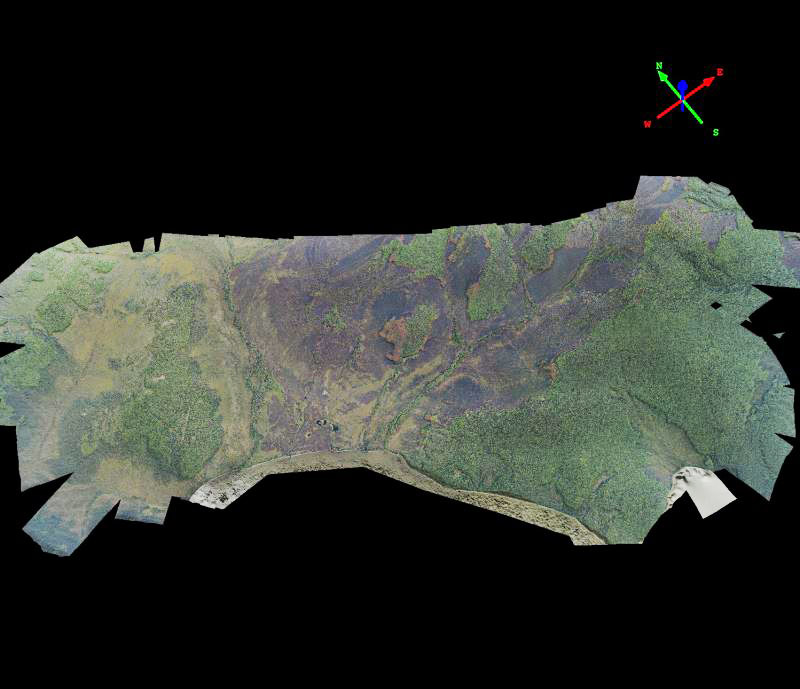
Image: Orthomosaic of Beaver Log Lakes fire scar near Lake Minchumina, 2013, courtesy Matt Nolan.
Image

Participate in JFSP Fuel Treatment Science Plan Survey

Your input is requested on fuel treatment research.

The Joint Fire Science Program (JFSP) has undertaken a broad scope project to determine important research needs related to fuel treatment and develop a Fuel Treatment Science Plan. This plan will affect the policy, research, and management aspects of the fuel treatment program. It will have implications across local, regional, national, and interagency planning scales; across the range of short-intermediate, and long-term temporal scales; and will assist project and/or plan development across site-specific, project, unit, landscape, regional, and national level spatial scales. Specifically, this plan will outline future relevant fuel treatment research topics for JFSP consideration.
 
In order to fully address this topic, it is necessary to identify sources and conduct thorough information gathering. As part of this effort, contact with program leaders, stakeholders, project managers, and practitioners is critically important. This questionnaire has been developed to help obtain feedback and input. It consists of questions in the areas of fuel treatment importance, barriers and impediments to implementation, tools and guidance information, and areas of future research focus.
 
You are receiving this questionnaire because your input is valued and needed. Due to governmental rules and procedures, the initial questionnaire could only be distributed to federal employees and entities. This questionnaire is being distributed through the Northern Rockies Fire Science Network and The University of Montana to permit the widest distribution across all non-federal agencies, organizations, and individuals interested in fuel treatment. Please feel free to distribute this invitation and link to other individuals that have a role, interest, and involvement with fuel treatment activities.
   
The following link provides access to the non-federal questionnaire. We would ask you to complete the questionnaire before January 31, 2014 to facilitate analysis of the results.  https://www.surveymonkey.com/s/QYVSMNL
 
In the event any federal employees receive this message and are interested in completing the questionnaire, please use the following link to access the federal version and do not use the above listed link: https://www.surveymonkey.com/s/98H9BHM  
 
Please don’t hesitate to email us with questions or comments [put “Fuel Treatment Science Plan” in the subject line].  We thank you for your interest and support for this project.
 
Vita Wright
Northern Rockies Fire Science Network
vita.wright@umontana.edu
 
Tom Zimmerman
tomzimmerma@gmail.com